Quick answer
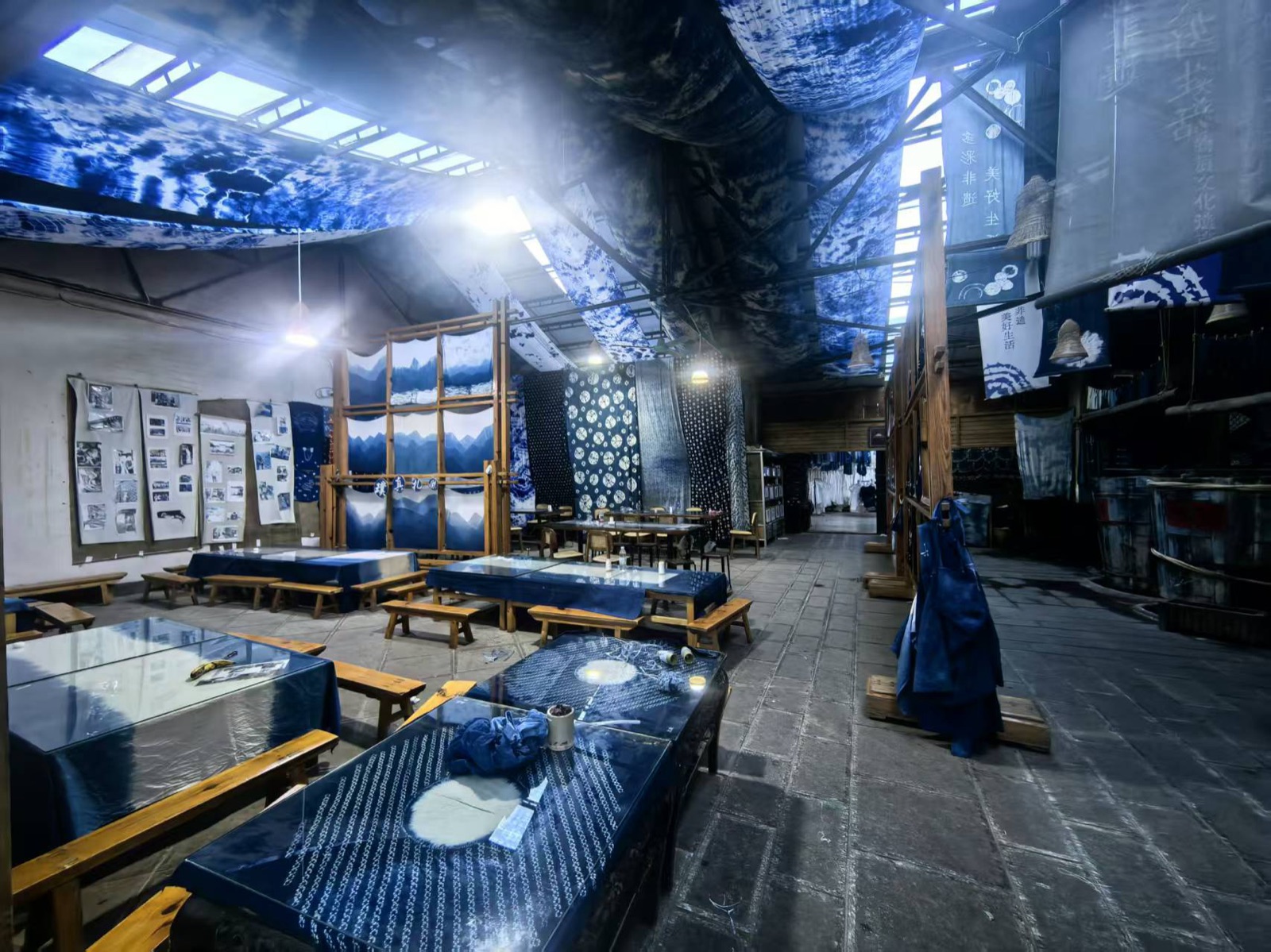
Bai tie-dye (白族扎染) is the indigo resist-dye craft of the Bai people around Dali, Yunnan. Cloth is bound or stitched, then dipped again and again in a living natural-indigo vat so the tied areas stay white — leaving soft blue-and-white patterns. It is national intangible cultural heritage, and the place to see it is Zhoucheng village, where you can dye your own scarf.
Bai tie-dye at a glance
| Chinese name | 白族扎染 (Báizú zārǎn) |
|---|---|
| People | Bai (白族), Dali region |
| Home | Zhoucheng (周城) village, Dali, Yunnan |
| Status | National intangible cultural heritage (2006) |
| Dye | Fermented natural indigo from bǎnlángēn (板蓝根) |
| Base cloth | White cotton and cotton-hemp |
| Technique | Stitch / bind resist, then repeated dips |
| Signature | Soft blue-and-white patterns, halo edges |
A craft grown from indigo
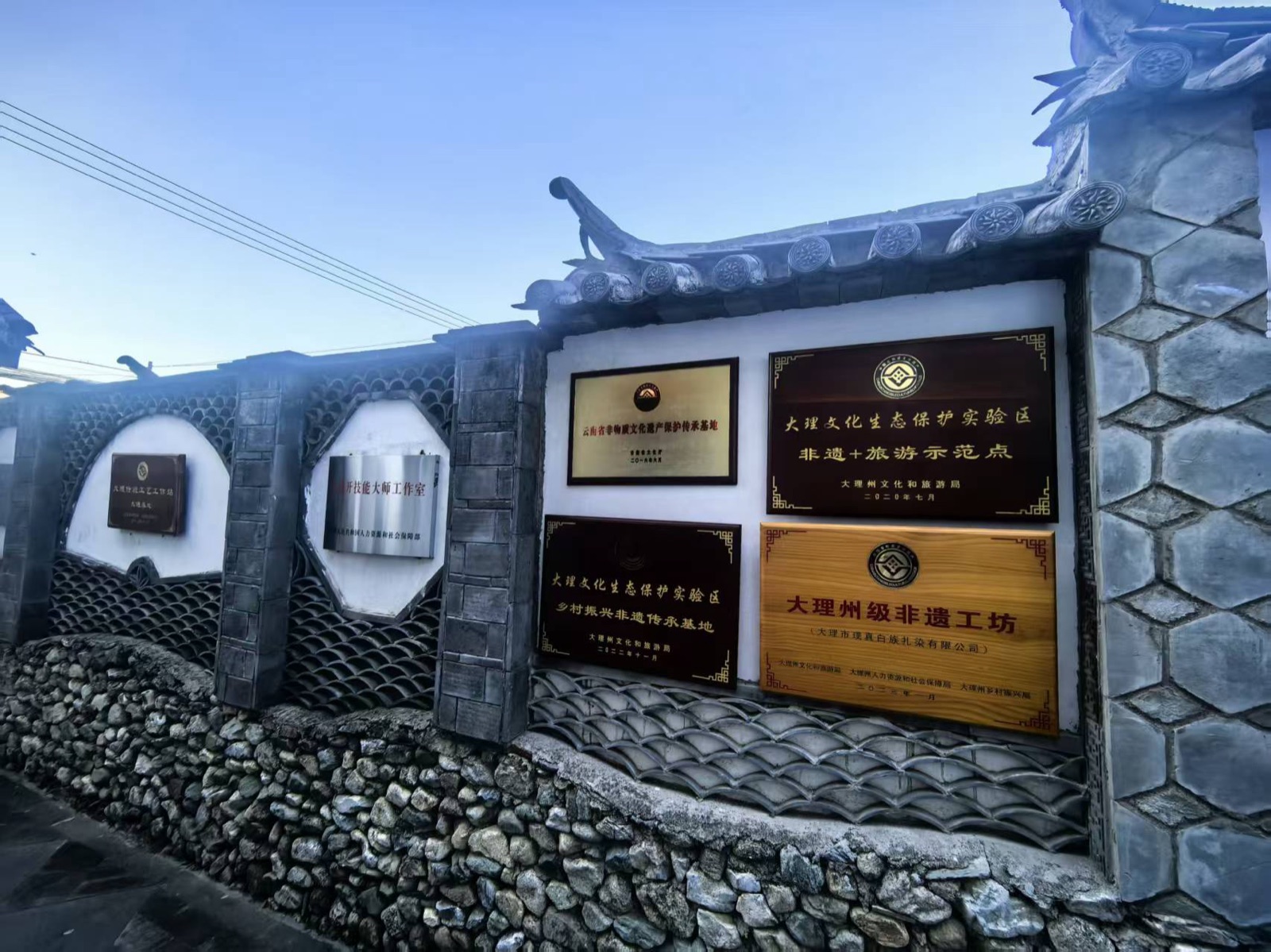
The Bai (白族) have dyed cloth around the shores of Erhai Lake for well over a thousand years, and by the Ming and Qing dynasties Dali tie-dye was a recognised regional product. The craft was built on a local plant — bǎnlángēn (板蓝根, Chinese woad) — fermented into a living indigo vat. In 2006 Bai tie-dye was inscribed as national-level intangible cultural heritage, and Zhoucheng was designated a heritage-and-tourism demonstration village, funding master dyers and workshops so the skill is passed on.
How Bai tie-dye is made
The Chinese name says it plainly: zā (扎, to tie) and rǎn (染, to dye). The magic is in the binding — wherever the cloth is tightly tied, the dye cannot reach, so that area stays white.
The pattern is marked onto white cloth — flowers, butterflies, fish, geometric medallions.
Cloth is folded, bound with thread or sewn tight so the bound areas will resist the dye.
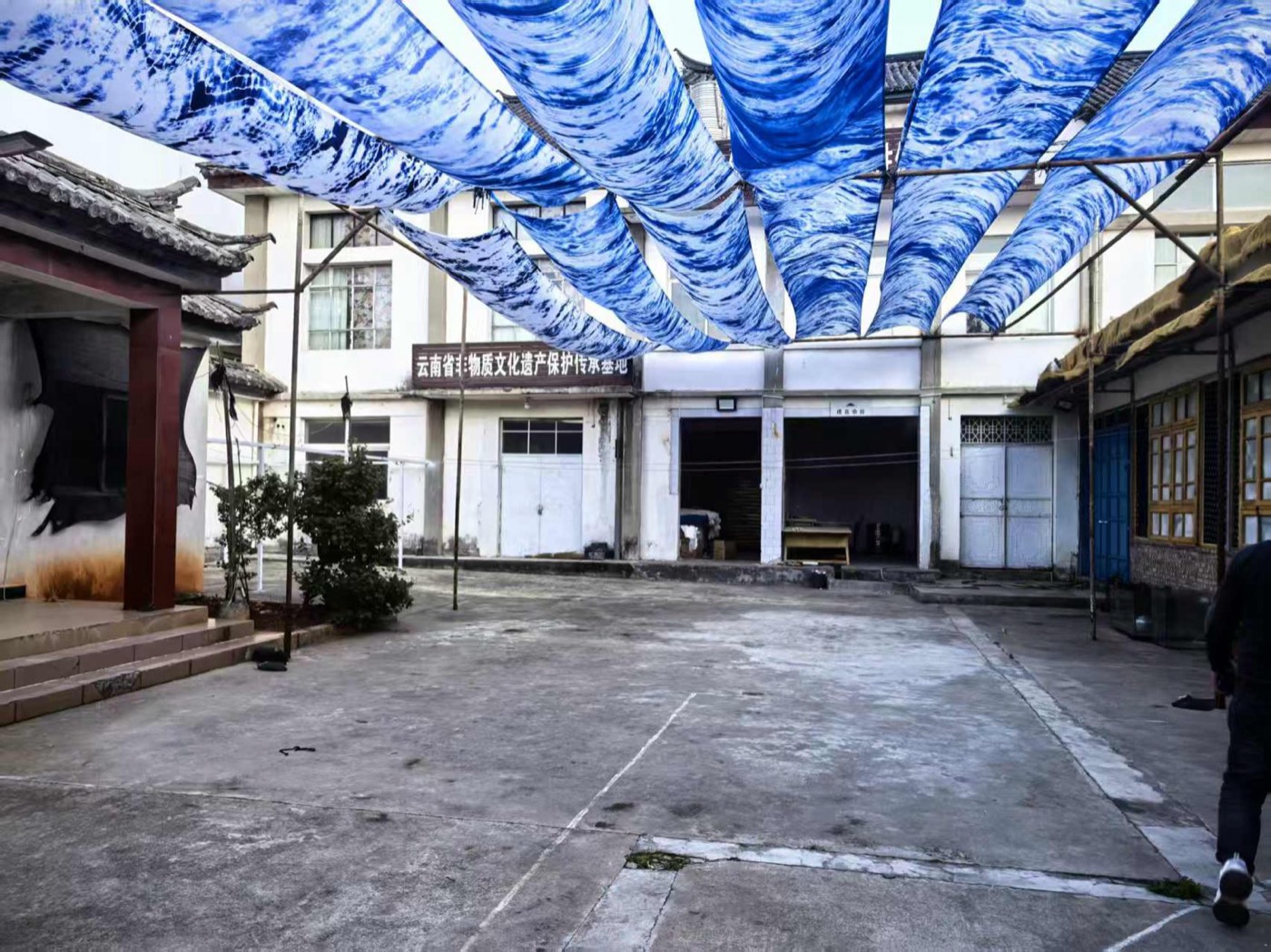
The bundle is dipped in a fermented indigo vat, aired to oxidise, then dipped again — often a dozen times — to build depth.
Threads are cut and the cloth opened to reveal the white pattern with its soft blue 'halo' where dye seeped in.
Because the cloth is dipped many times and oxidises in the air between dips, the blue builds up in layers and bleeds slightly past the binding — giving Bai tie-dye its signature soft halo edge rather than a hard printed line.
Where to see & try it near Dali
- Zhoucheng village (周城) — the heartland, about 25 km north of Dali old town near Butterfly Spring; a national intangible-heritage workshop plus many family dye houses.
- Hands-on classes — bind and dip your own scarf or square; most sessions run one to two hours and you keep the piece.
- Dali old town shops — convenient for finished cloth, but check for the tell-tale halo edge to be sure it is hand-dyed.
Pair it with a Naxi Dongba culture visit up in Lijiang, and plan the wider route with the Yunnan travel hub.
Frequently asked questions
What is Bai tie-dye?
Bai tie-dye (白族扎染) is a resist-dye craft of the Bai people around Dali in Yunnan. White cotton is hand-stitched or bound and then repeatedly dipped in a fermented natural-indigo vat; the tied areas resist the dye and stay white, leaving soft blue-and-white patterns. It was listed as national intangible cultural heritage in 2006.
Where is the best place to see Bai tie-dye?
Zhoucheng (周城), a large Bai village between Dali old town and Butterfly Spring, is the recognised heartland. It has a national intangible-heritage workshop and many family dye houses where you can watch the whole process and dye your own piece.
Can I make my own tie-dye scarf in Dali?
Yes. Workshops in Zhoucheng run hands-on sessions: you bind or stitch a plain scarf, dip it in the indigo vat yourself, then untie it to reveal your pattern. Sessions usually take one to two hours and you keep what you make.
What dye is used, and is it natural?
Traditional Bai tie-dye uses natural indigo fermented from the bǎnlángēn (板蓝根, Isatis / woad) plant. The living vat is kept alive with lime and other additives. The colour deepens with each dip and oxidises from green to the characteristic deep blue in the air.
How do I tell hand-dyed from printed cloth?
Genuine hand tie-dye has slightly irregular patterns, a soft graded 'halo' at the edges of each shape, and tiny pucker marks or stitch holes where the cloth was bound. Machine-printed imitations are perfectly even and have a sharp, flat edge.
Keep exploring
Dali · Living Heritage
Dye your own indigo scarf
Add a Zhoucheng tie-dye workshop to a Dali–Lijiang trip alongside old towns, lakes and Naxi culture.

PandaTouring Newsletter
Get Travel Tips in Your Inbox
Insider guides, hidden gems, and exclusive deals for your China adventure — delivered weekly.
No spam, ever. Unsubscribe anytime.