Quick answer
Chinese paper-cutting (剪纸, jiǎnzhǐ) is a folk art in which thin red paper is folded for symmetry and cut — with fine scissors or a knife on a wax board — into flowers, animals and lucky characters. The pieces become window flowers (窗花) and decorations for weddings and Spring Festival. In East China the Yangzhou and Jinling (Nanjing)styles are famous, and the craft was inscribed on UNESCO's heritage list in 2009.
Chinese paper-cutting at a glance
| Chinese name | 剪纸 (jiǎnzhǐ) · knife-cut form 刻纸 (kèzhǐ) |
|---|---|
| Craft | Paper-cutting — folk decorative art |
| Material | Thin paper, most often red (红纸) |
| Tools | Fine scissors, or a knife on a wax board |
| East China styles | Yangzhou (扬州) and Jinling / Nanjing (金陵) paper-cut |
| Classic use | Window flowers 窗花, weddings, Spring Festival |
| Motifs | Flowers, animals, zodiac, lucky characters like 囍 and 福 |
| Status | UNESCO Representative List of the Intangible Cultural Heritage of Humanity (2009) |
A folk art cut from red paper
Paper-cutting spread across China not long after paper itself became common, and it grew into one of the most widespread of all Chinese folk arts. Cut from cheap sheets of red paper — red for luck and celebration — the designs were pasted to windows as window flowers (窗花), stuck up for the Lunar New Year, and cut with the double-happiness character 囍 for weddings. In the Jiangnan region two centres stand out: Yangzhou (扬州), prized for its refined, flowing knife-cut florals, and Jinling — old Nanjing (金陵) — known for a bolder, livelier folk hand. In 2009Chinese paper-cut was inscribed on UNESCO's Representative List of the Intangible Cultural Heritage of Humanity.
How Chinese paper-cutting is made
The Chinese name says it plainly: jiǎn (剪, to cut with scissors) and zhǐ (纸, paper). The trick is the fold — crease the paper first and a single cut repeats into perfect symmetry when it opens.
Pick a motif — a flower, a zodiac animal, or a lucky character such as 福 (fú, fortune) or 囍 (double happiness) for weddings.
A square of red paper is folded in half or into quarters so a single cut repeats into a balanced, mirror-image pattern when opened.
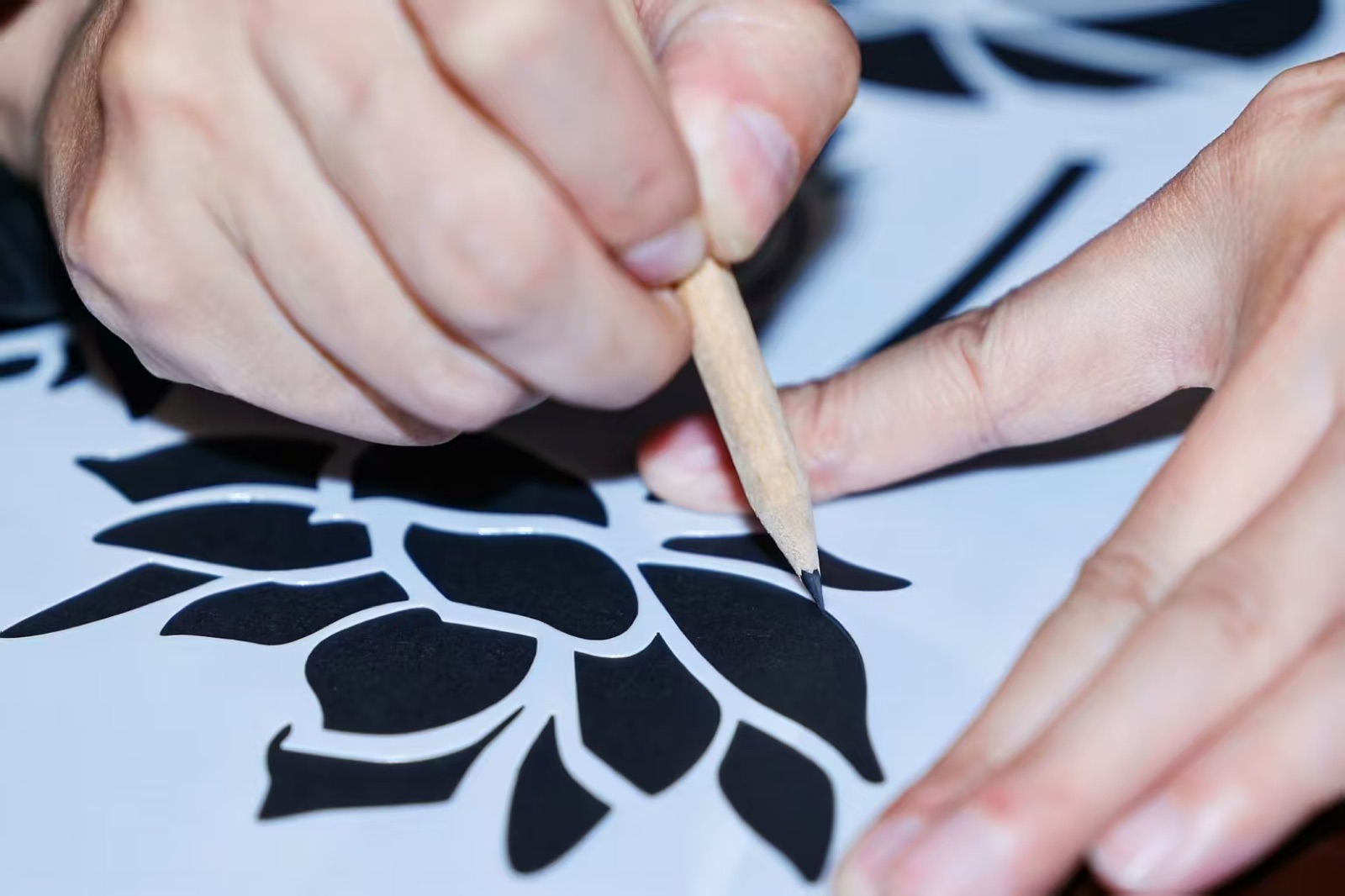
With fine scissors, or a small knife against a wax board, the design is cut away — the knife-and-wax method (刻纸) lets you stack sheets and cut many at once.
The paper is carefully opened to reveal the full pattern, then pressed flat and pasted to a window pane or gifted as decoration.
There are two hands at work in the craft. Scissor-cutting (剪纸) is quick and spontaneous, one folded sheet at a time; knife-cutting (刻纸) presses a small blade against a soft wax board so several stacked sheets can be cut together, giving the crisp, repeatable fineness behind the best Yangzhou and Jinling work.
Where to see & try it in East China
- Yangzhou (扬州) — a heartland of refined knife-cut paper art; look for heritage studios where masters demonstrate the wax-board method.
- Nanjing / Jinling (金陵) — home of the bold Jinling folk style, with paper-cut on show in craft markets and heritage centres around the old city.
- Hands-on classes — fold and cut your own symmetrical flower or lucky character; most sessions run about an hour and you keep the piece.
- Spring Festival markets — the season when window flowers and 福 characters appear everywhere across the water towns.
Pair it with an oil-paper umbrella painting session or some bamboo weaving, and plan the wider route with the East China heritage hub.
Frequently asked questions
What is Chinese paper-cutting?
Chinese paper-cutting (剪纸, jiǎnzhǐ) is a folk art in which thin paper — most often red — is cut with scissors or a knife into decorative designs. Cutters fold the paper for symmetry and cut flowers, animals, zodiac figures and lucky characters. The pieces are used as window flowers (窗花), and for weddings and Spring Festival. It was inscribed on UNESCO's Representative List of the Intangible Cultural Heritage of Humanity in 2009.
Is Chinese paper-cutting UNESCO heritage?
Yes. Chinese paper-cut was inscribed on UNESCO's Representative List of the Intangible Cultural Heritage of Humanity in 2009, recognising it as a living folk tradition passed down across generations and regions of China.
What is the difference between scissor-cut and knife-cut paper-cutting?
Scissor-cutting (剪纸) is done freehand with fine scissors, usually one folded sheet at a time, and has a lively, spontaneous line. Knife-cutting (刻纸) uses a small sharp knife pressed against a soft wax board; because several sheets can be stacked and cut together, it produces very fine, precise and repeatable detail — the method behind the crisp Yangzhou and Jinling styles.
Which East China regions are famous for paper-cutting?
In the Jiangnan region, Yangzhou (扬州) is celebrated for elegant, refined knife-cut work with flowing floral lines, while Jinling — old Nanjing (金陵) — is known for its bold, lively folk style. Both are long-standing centres you can seek out around the lower Yangtze.
Can I try paper-cutting as a beginner?
Absolutely. Beginner workshops are among the most approachable Jiangnan crafts: you fold a square of red paper, cut a simple symmetrical flower or lucky character, and open it to reveal the pattern. A session runs about an hour and you keep your piece.
Keep exploring
Jiangnan · Living Heritage
Cut your own window flower
Add a paper-cutting workshop to a Suzhou–Hangzhou or Nanjing trip alongside gardens, canals and folk crafts.

PandaTouring Newsletter
Get Travel Tips in Your Inbox
Insider guides, hidden gems, and exclusive deals for your China adventure — delivered weekly.
No spam, ever. Unsubscribe anytime.