Quick answer
The oil-paper umbrella (油纸伞) is a classic Chinese umbrella of the Jiangnan region: a bamboo frame and ribs, covered with mulberry-bark paper and waterproofed with tung oil (桐油). The canopy is hand-painted with bamboo, plum blossom, birds or landscapes. Umbrella making is national intangible cultural heritage, and the favourite thing to do is paint your own.
Oil-paper umbrella at a glance
| Chinese name | 油纸伞 (yóuzhǐsǎn) |
|---|---|
| Region | Jiangnan / East China (Jiangsu, Zhejiang, Anhui) |
| Status | National intangible cultural heritage |
| Frame | Bamboo shaft and hand-cut ribs |
| Canopy | Mulberry-bark paper stretched over the ribs |
| Waterproofing | Tung oil (桐油) brushed over the paper |
| Decoration | Hand-painted bamboo, plum blossom, birds, landscapes |
| Symbolism | 油纸 puns on 有子 — a wedding blessing for children |
A craft built from bamboo & paper
Long before the folding steel umbrella, Jiangnan sheltered from sun and rain under paper. The Chinese oil-paper umbrella brings together three humble materials — bamboo for the frame, tough mulberry-bark paper for the canopy, and tung oil (桐油) to make that paper waterproof. Making one is slow, hand work: splitting and notching the ribs, pasting and trimming the paper, oiling it in layers, then painting the finished dome. Umbrella making is protected as national intangible cultural heritage, and workshops around the water towns keep the skill alive by teaching visitors to decorate their own.
How an oil-paper umbrella is made
The name spells out the materials: yóu (油, oil) and zhǐ (纸, paper) over a sǎn (伞, umbrella). The strength is in the layering — bamboo for spring, paper for the surface, and tung oil to seal it against the rain.
Seasoned bamboo is split into a shaft and dozens of slender ribs, then notched and threaded so the umbrella opens and folds smoothly.
Tough mulberry-bark paper is cut to shape and pasted over the ribs, then trimmed at the rim to form the round canopy.
The paper is brushed with tung oil and dried in layers until it turns translucent, supple and rain-resistant.
Artisans hand-paint bamboo, plum blossom, birds or a landscape across the canopy, then string and balance the umbrella so it opens evenly.
Because the tung oil soaks in and dries slowly over several coats, the paper turns from opaque white to a warm translucence — so a finished umbrella glows softly when light passes through it, with the painted bamboo or blossom showing on both sides.
Symbolism & the wedding umbrella
The oil-paper umbrella is loaded with meaning. Because 油纸 (oil-paper) sounds like 有子 (to have children), the umbrella became a wish for a marriage blessed with children, and it appears in wedding customs across Jiangnan. The round canopy also stands for reunion and completeness, while the painted motifs carry their own good wishes — bamboo for resilience, plum blossom for endurance through winter, and birds and landscapes for harmony. It is a keepsake as much as a rain shade.
Where to see & try it in Jiangnan
- Water-town & heritage workshops — craft studios in the Jiangnan canal towns show the full frame-to-oil process and run hands-on painting classes.
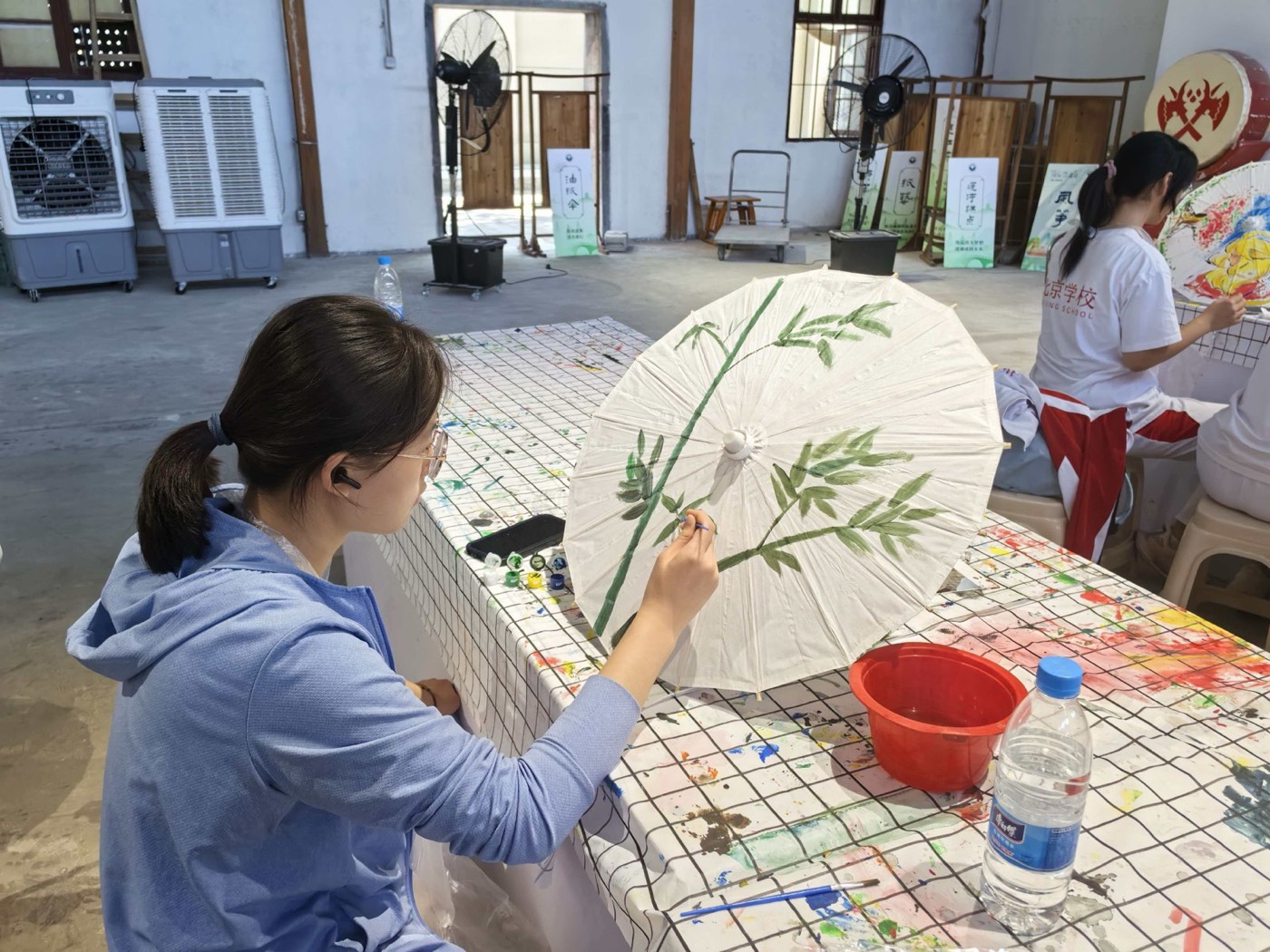
- Paint-your-own sessions — decorate a ready-made canopy with bamboo, blossoms or a landscape; most sessions run one to two hours and you keep the umbrella.
- Craft shops — handy for finished umbrellas, but ask whether a piece is tung-oil finished for real use or made as a decorative keepsake.
Pair it with bamboo weaving or paper-cutting, and plan the wider route with the East China heritage hub.
Frequently asked questions
What is a Chinese oil-paper umbrella?
An oil-paper umbrella (油纸伞, yóuzhǐsǎn) is a traditional Chinese umbrella built from a bamboo frame and ribs, covered with mulberry-bark paper and waterproofed with tung oil (桐油). The canopy is usually hand-painted with bamboo, plum blossom, birds or landscapes. Umbrella making is protected as national intangible cultural heritage in China.
How is an oil-paper umbrella made?
A craftsperson splits seasoned bamboo into a shaft and ribs, pastes mulberry-bark paper over the frame, then brushes the paper with tung oil in layers until it is translucent and waterproof. Finally the canopy is hand-painted and the whole umbrella is strung and balanced so it opens evenly. Each umbrella passes through many separate steps by hand.
Why do oil-paper umbrellas appear at Chinese weddings?
The words 油纸 (oil-paper) sound like 有子 (to have children), so an oil-paper umbrella carries a wish for a happy marriage blessed with children. The round canopy also suggests reunion and completeness, which is why umbrellas often feature in wedding customs and gifts in the Jiangnan region.
Can I paint my own oil-paper umbrella?
Yes. In Jiangnan heritage workshops the most popular activity is painting a plain oil-paper umbrella yourself — brushing bamboo, blossoms or a simple landscape onto the ready-made canopy. Sessions usually take one to two hours and you keep the umbrella you decorate.
Are oil-paper umbrellas actually waterproof?
Traditionally yes. The tung-oil coating seals the mulberry-bark paper so light rain runs off rather than soaking through. That said, painted umbrellas sold to travellers are often meant as decorative keepsakes, so it is worth asking whether a particular one is finished for everyday use or for display.
Keep exploring
Jiangnan · Living Heritage
Paint your own oil-paper umbrella
Add a Jiangnan umbrella-painting workshop to a Suzhou–Hangzhou or water-town trip alongside canals, gardens and craft.

PandaTouring Newsletter
Get Travel Tips in Your Inbox
Insider guides, hidden gems, and exclusive deals for your China adventure — delivered weekly.
No spam, ever. Unsubscribe anytime.