Quick answer
Freshwater pearls(淡水珍珠) are China's great pearl story: the country grows the large majority of the world's freshwater pearls, and the global capital is Zhuji (诸暨) in Zhejiang. The signature experience is opening a live cultured mussel — one shell can hold dozens of pearls — then sorting them by colour and lustre and setting your favourite in a pendant. It is a fun family activity and a shopping-savvy primer, best thought of as living pearl culture rather than a single official craft.
Freshwater pearls at a glance
| Chinese name | 淡水珍珠 (Dànshuǐ zhēnzhū) |
|---|---|
| Region | East China · Zhejiang province |
| Capital | Zhuji (诸暨), the global freshwater-pearl hub |
| Source | Live cultured freshwater mussels |
| Yield | Dozens of pearls from a single mussel |
| Framing | Pearl culture — a hands-on heritage experience |
| What you do | Open a mussel, sort pearls, set one in jewellery |
| Good for | Families, first-time buyers, short visits |
China's pearl country
China grows the large majority of the world's freshwater pearls, and almost all of that trade flows through one place: Zhuji (诸暨), a city in Zhejiang province in East China that is widely called the global freshwater-pearl capital. The water country of the wider Jiangnan region — the same canal-and-lake landscape that gave us silk and oil-paper umbrellas — has farmed mussels for pearls for generations. This is best understood as a living pearl culture and a hands-on heritage experience rather than a single officially listed craft, but it is deeply rooted, and it is the easiest place in China to open a mussel yourself.
How the experience works
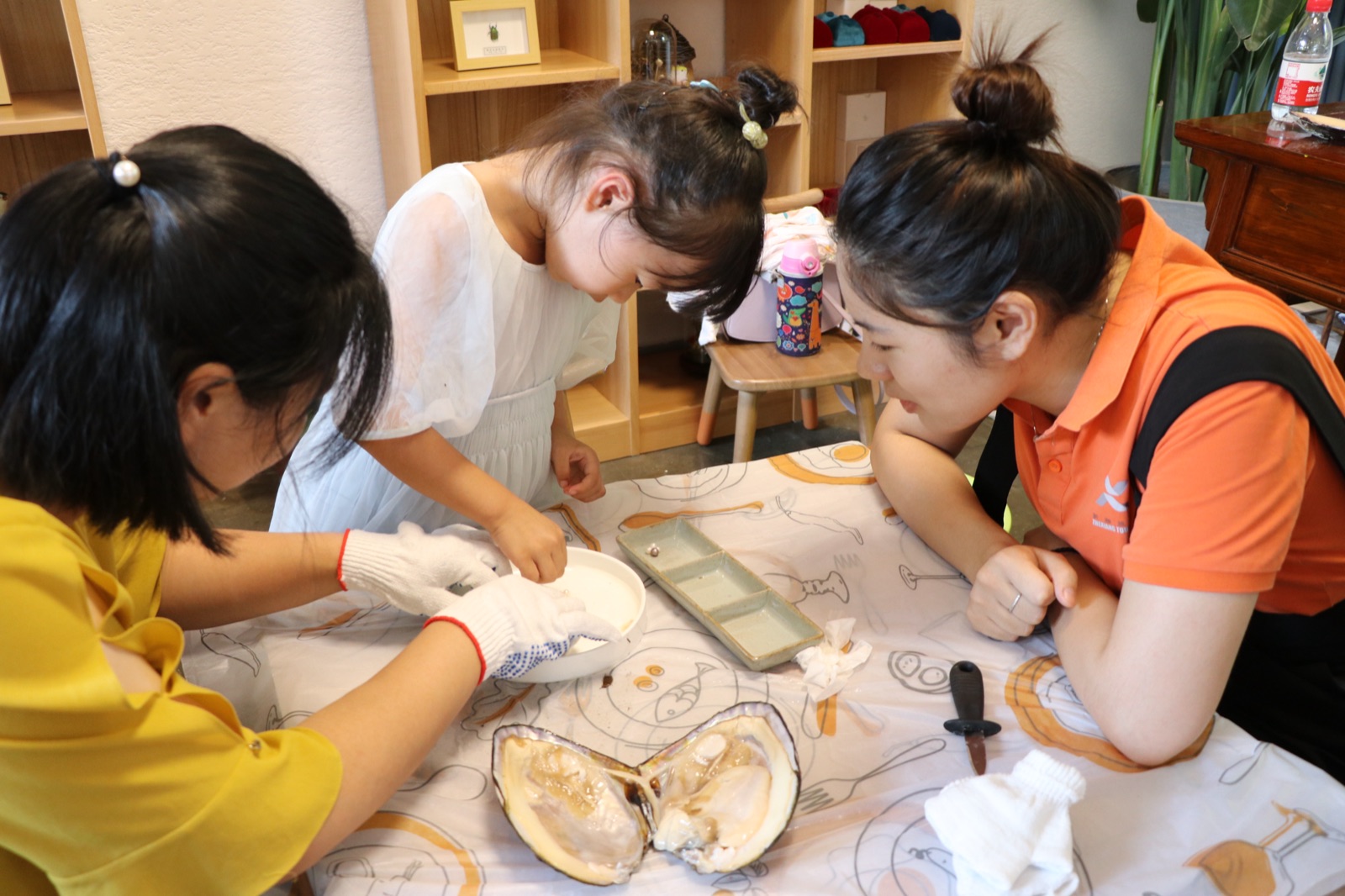
The heart of the visit is 开蚌(kāi bàng, "opening the mussel"). A single live cultured mussel can hold dozens of pearls at once, because many small pieces of mantle tissue are implanted into one shell — so no two mussels open the same.
Pick a live cultured mussel from the tank; larger, well-fed shells tend to hold more and rounder pearls.
A guide prises the mussel open with a knife, revealing the soft mantle studded with pearls — often dozens in one shell.
Rinse and lay the pearls out, then sort them by colour, shape, size and lustre — white, pink, peach and lavender are common.
Choose your best pearl and have it set into a pendant, ring or earring on the spot, so you leave with a finished keepsake.
Because you never know exactly what a shell holds until it is opened, the moment carries a little suspense — and children love it. Once your pearls are out, sorting them into colours and grades is half the fun and doubles as a quick lesson in what makes a pearl good.
How to judge a pearl
The same four factors decide the value of any pearl, whether you are sorting your own haul or shopping in a market. Learn them once and you will buy far more wisely.
| Lustre | The most important factor — a bright, mirror-like glow with sharp reflections beats a dull, chalky surface. |
|---|---|
| Surface | Fewer blemishes, pits and wrinkles mean a higher grade; a clean, smooth skin is prized. |
| Shape | Round is rarest and most valued; near-round, oval, drop and free-form baroque cost less but can be lovely. |
| Size | Measured in millimetres — larger pearls are scarcer and pricier, but only when lustre and surface hold up. |
The golden rule: lustre first. A smaller pearl with a bright, mirror-like glow beats a large one with a dull, chalky skin. Tilt the pearl under a light and look for sharp reflections and depth, then check the surface and shape before you ever ask about size or price.
Frequently asked questions
What is the freshwater pearl experience?
It is a hands-on activity in China's freshwater-pearl country, mostly in Zhejiang. You choose a live cultured mussel, watch it opened, and find the pearls grown inside — often dozens in a single shell. You then sort them by colour and quality and set your favourite into a piece of jewellery to take home.
Where are China's freshwater pearls from?
China grows the large majority of the world's freshwater pearls, and the recognised global capital is Zhuji (诸暨) in Zhejiang province, in East China. The surrounding water country of the Jiangnan region has farmed mussels for pearls for a long time, and it is the easiest place to try the open-a-mussel experience.
How many pearls are inside one mussel?
A single live cultured freshwater mussel can hold dozens of pearls at once, because many small pieces of mantle tissue are implanted into one shell. The exact number, size and colour vary from mussel to mussel, which is part of the fun of opening one yourself.
How do I judge whether a pearl is good?
Look at four things: lustre, surface, shape and size. Lustre matters most — a bright, mirror-like glow signals quality. Then check for a clean surface with few blemishes, a round or pleasingly even shape, and a larger size. A big pearl with dull lustre is worth less than a smaller pearl that truly glows.
Is pearl culture an official intangible cultural heritage craft?
It is best described honestly as a living pearl culture and a hands-on heritage experience rather than a single officially listed craft. Zhejiang's pearl-farming tradition is old and locally celebrated, and the open-a-mussel activity is a fun, shopping-savvy primer — but treat it as pearl culture and experience, not as a formal ICH craft.
Keep exploring
Zhejiang · Pearl Culture
Open a mussel & keep the pearl
Slot a Zhejiang pearl workshop into a Hangzhou or water-town trip — a fun family stop and a quick eye for lustre.

PandaTouring Newsletter
Get Travel Tips in Your Inbox
Insider guides, hidden gems, and exclusive deals for your China adventure — delivered weekly.
No spam, ever. Unsubscribe anytime.