
Quick answer
Shu embroidery (蜀绣) is the silk-needlework tradition of Sichuan, worked in finely split silk on silk or satin. Prized for its luminous satin shading and a remarkable double-sidedtechnique, it is one of China's Four Great Embroideries and national intangible cultural heritage. See it in Chengdu, then read the full guide.
Shu embroidery at a glance
| Chinese name | 蜀绣 (Shǔ xiù), also Chuan embroidery |
|---|---|
| Origin | Sichuan, centred on Chengdu |
| Age | Documented for 2,000+ years |
| Status | National intangible cultural heritage (2006) |
| Material | Split silk thread on silk / satin |
| Signature | Double-sided embroidery; soft satin shading |
| Stitch types | Over 30 traditional stitches |
| Classic motifs | Pandas, carp, hibiscus, landscapes |
A 2,000-year tradition
The name comes from Shu, the ancient name for the Chengdu region. Sichuan's silk was already a Silk Road luxury under the Han dynasty, and embroidery grew up beside the famous Shu brocade. The craft peaked in the Qing dynasty, when Chengdu workshops supplied embroidered robes, fans and screens. In 2006 it was inscribed as national-level intangible cultural heritage, funding master artisans and apprenticeships so the skill is passed on rather than lost.

The signature technique: double-sided embroidery
Shu embroidery's showpiece is double-sided embroidery (双面绣): a sheer silk panel stitched so a complete, clean image appears on both faces — sometimes a different image on each — with no knots and no loose threads anywhere. Masters split a single silk filament into a dozen finer strands to grade colour smoothly, and use more than 30 named stitches.
| Stitch | What it does |
|---|---|
| Satin / shading stitch (晕针) | The soft tonal gradients Shu work is famous for. |
| Hair stitch (滚针) | Fine flowing lines — fish fins, flower stems, fur. |
| Seed / knot stitch (打籽针) | Textured dots for flower centres and detail. |
| Layered float (铺针) | Smooth solid fills with no visible direction. |
The Four Great Embroideries of China
Shu embroidery is one of four regional silk-embroidery traditions, each with its own character:
| Tradition | Region | Character |
|---|---|---|
| Su embroidery | Suzhou, Jiangsu | Delicate realism, fine detail |
| Shu embroidery | Sichuan (Chengdu) | Soft satin shading, double-sided work |
| Xiang embroidery | Hunan | Bold, painterly, ink-wash feel |
| Yue embroidery | Guangdong | Dense colour, gold thread, lively scenes |
Where to see it in Chengdu
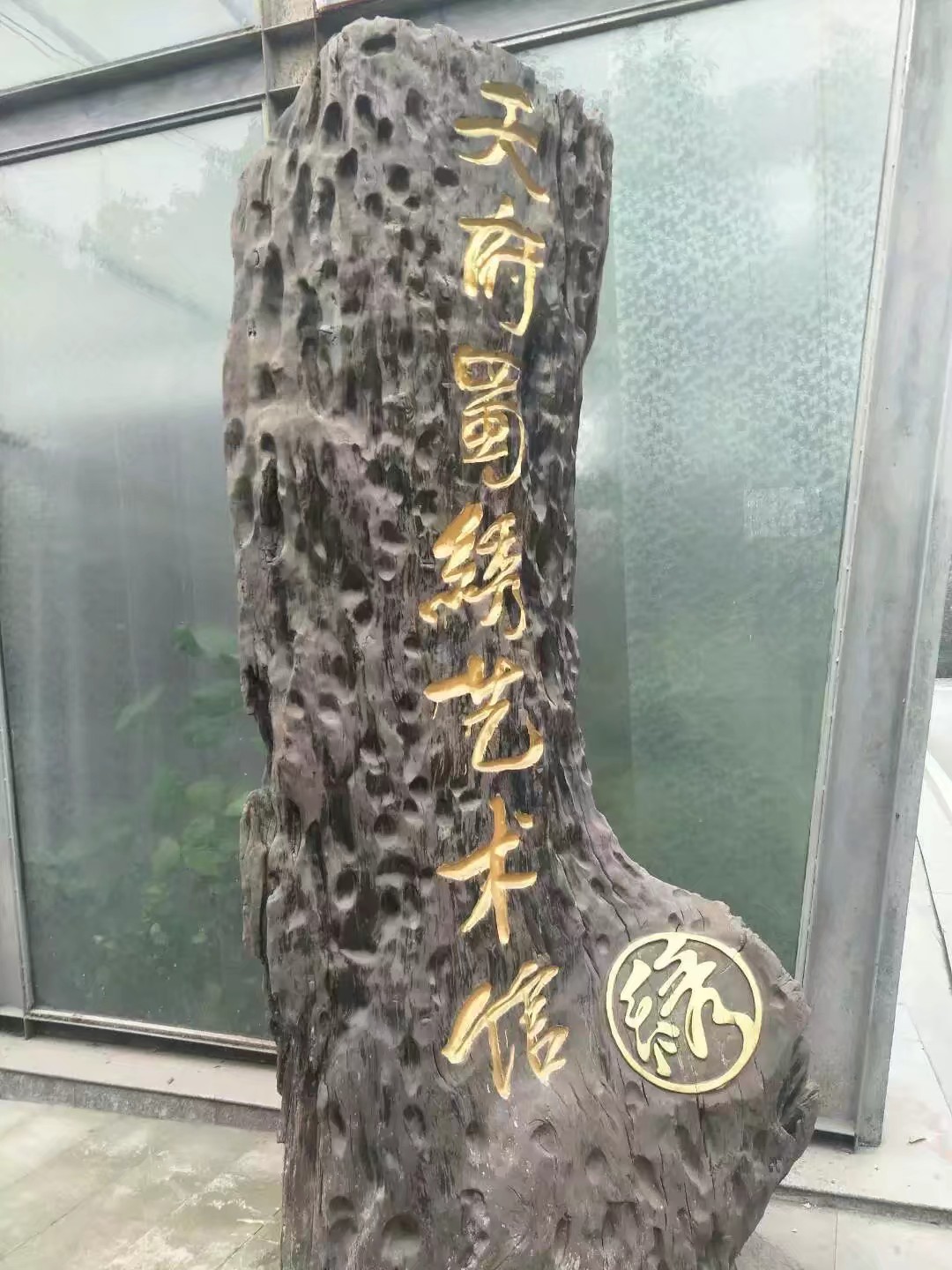
- Shu Brocade & Embroidery Museum — historic looms, masterpieces and live demonstrations.
- Jinli Ancient Street & the Wenshu Monastery lanes — open studios where you can watch and buy directly.
- Beginner workshops — some studios run short classes where you stitch a simple motif yourself.
Pair it with the panda base, a Chengdu food crawl, and an evening of Sichuan opera.
Frequently asked questions
What is Shu embroidery?
Shu embroidery (蜀绣) is the traditional silk-thread needlework of Sichuan, centred on Chengdu. It is one of China's Four Great Embroideries and was listed as national intangible cultural heritage in 2006, known for soft satin shading and double-sided work.
What makes Shu embroidery different from Su embroidery?
Su embroidery (Suzhou) is prized for ultra-fine photographic realism, while Shu embroidery favours soft, even satin shading, a limited number of luminous colours, and the double-sided technique. Both use split silk thread but have distinct regional styles.
What is double-sided embroidery?
A single sheer silk panel is stitched so a complete, clean image appears on both faces — sometimes a different picture on each side — with no knots or loose threads, so the framed piece can be viewed from either side.
Where can I see or buy Shu embroidery in Chengdu?
Visit the Shu Brocade & Embroidery Museum and the studios around Jinli Ancient Street and the Wenshu Monastery area, where artisans work in the open and sell directly. Check the reverse side to judge quality.
How can I tell hand embroidery from machine work?
Genuine hand embroidery has slightly irregular, organic stitch direction and a clean reverse on double-sided pieces; machine embroidery is mechanically uniform and much cheaper. Reputable museum shops provide provenance for higher-value pieces.
Keep exploring
Chengdu · Living Heritage
See the craft for yourself
Add a Shu embroidery visit to a Chengdu trip alongside pandas, food and a face-changing show.

PandaTouring Newsletter
Get Travel Tips in Your Inbox
Insider guides, hidden gems, and exclusive deals for your China adventure — delivered weekly.
No spam, ever. Unsubscribe anytime.